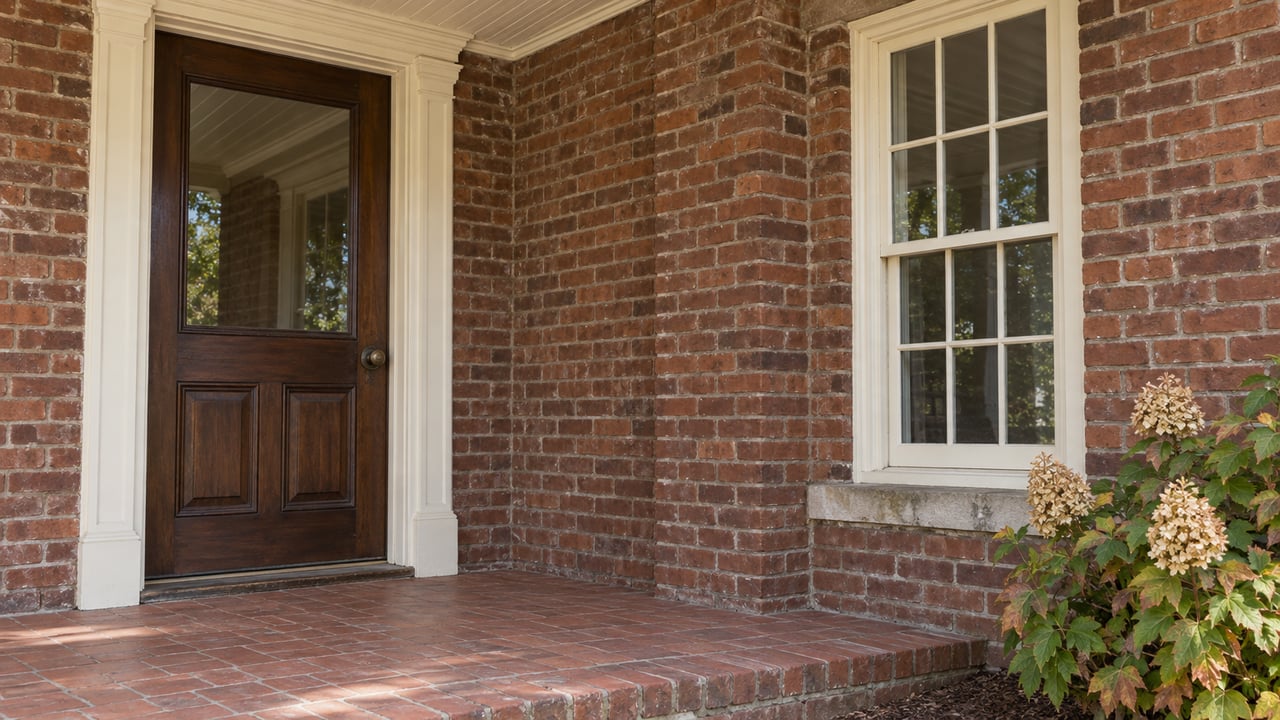
For an older house in Midtown's local historic districts, the most expensive exterior question usually comes before any plan for new windows or a rear addition. It is whether the windows, fences and porch already on the house were approved by the Memphis Landmarks Commission. Tennessee's standard seller disclosure form does not ask whether a house sits in a historic district at all. The public record answers that question, and the buyer is the one who has to look it up.
A Porch on Carr Avenue
For the Commission's September 24, 2026 meeting, staff reviewed a one-story, Colonial Revival-influenced cottage built around 1905 in the Carr Avenue Historic District. The staff report lays out the sequence:
- Work started without a Certificate of Appropriateness or building permits, and a stop-work order followed on August 12, 2025.
- The Commission approved a Certificate of Appropriateness on September 25, 2025, to replace the windows, doors and exterior siding.
- A building permit was issued on October 21, 2025.
- The final inspection failed on July 31, 2026. The original brick porch columns had been removed. The double windows on the front had not been installed. The rectangular gable windows had been replaced with octagonal ones. New fences and gates had gone in without approval.
Staff recommended rejecting retroactive approval of the changes. The report asks for the octagonal gable windows to be replaced with rectangular windows that closely match the originals. It asks for the brick porch columns to be rebuilt to match the originals, with limestone caps, in traditional-size brick left unpainted. Detailed fence and gate plans would have to be submitted and a retroactive fee paid before a certificate could be issued. That is a staff recommendation, not the Commission's final ruling. Still, it shows what review of a finished project can look like in an overlay district. The question becomes whether the work matches what was approved, and the fix can mean rebuilding what was removed.
Which Map the House Is On
"Historic" is used loosely around Midtown, and the label covers two very different things.
A National Register listing is mostly an honor. Memphis Heritage notes that owners of privately owned National Register properties "are free to maintain, manage and dispose of their properties as they choose." A local Historic Overlay District carries review. Under the Unified Development Code, exterior new construction, alterations, demolitions, relocations and site improvements visible from the street must be reviewed and approved by the Landmarks Commission. The Division of Planning and Development says properties outside an approved local designation do not get the Commission's review.
Current Commission records include cases from these Midtown overlays:
- Annesdale-Snowden
- Carr Avenue
- Central Gardens
- Cooper-Young
- Evergreen
- Glenview
- Rozelle-Annesdale
- Speedway Terrace
- Vollintine-Evergreen
The two maps don't line up neatly. Rozelle-Annesdale is a local overlay that is not on the National Register. Vollintine-Evergreen became an overlay in July 2021 by combining four separately listed National Register districts with some smaller neighboring areas. Memphis Heritage also calls the overlay status of Cooper-Young and Speedway Terrace "somewhat complicated." City Council consent agendas that included final approval passed twice in 2018, but one more passage was required for full compliance. The group also points out that Tennessee law treats a governmental action in the process of approval as approved. In practice the Commission is reviewing cases in both neighborhoods right now. The September agenda includes proposed second-floor work at 1037 Meda Street and window and roof changes at 1905 Evelyn Avenue, both in Cooper-Young.
Sources don't even agree on the total. The Division's outreach page says the city has nineteen local districts, while the Memphis Heritage catalog says eighteen. Rely on the parcel map, not a neighborhood name or a count.
What the Disclosure Form Asks, and What It Leaves Out
Most Tennessee sales use the Tennessee REALTORS Residential Property Condition Disclosure, RF 201, version 01/01/2026. Its list of conditions the seller must say whether they know about has no question on historic designation. The nearest items are these:
- Room additions, structural modifications or other alterations or repairs made without necessary permits?
- Room additions, structural modifications or other alterations or repairs not in compliance with building codes?
- Any zoning violations, nonconforming uses and/or violations of "setback" requirements?
Those questions are about permits, building codes and zoning. None of them asks whether exterior work in a historic overlay received a Certificate of Appropriateness. The Carr Avenue file shows why that matters. A project can get its building permit and still fail final inspection because it departed from the Landmarks approval.
How Unapproved Work Comes to Light
According to the Division of Planning and Development, Preservation Planners often learn about projects while they are underway because a concerned neighbor reported them. An inspector then visits and issues a stop-work order, and the project waits until the owner applies for a certificate and pays a retroactive fee. That fee is the standard fee for the project, doubled. The 2026 application form repeats that work begun or completed before approval is charged double.
The permit system also checks for overlays. Historic districts are a layer in the county's GIS maps, and that layer triggers a notice in the Develop 901 portal so permit applications are screened for Certificate of Appropriateness requirements. Inspectors then confirm during and after the project that the approved plans were followed.
A seller who replaced the windows years ago with no permit at all may never have come up in that screening. A buyer who later pulls a permit for a kitchen or an addition sends the property back through it.
The Division's own framing is more moderate than the enforcement record suggests. "Most projects we hear about are repair and maintenance, so a COA isn't required," Margot Payne, the Division's Preservation Outreach and Grant Coordinator, said in a Develop 901 article. Repairing original windows is one thing. Swapping them for a different shape is the kind of change the Carr Avenue report flagged.
Checking a House During the Option Period
All of the records are public. Here is the order in which to check them:
- Confirm the overlay. Open the Shelby County Zoning Atlas from Develop 901. Local historic overlays carry an "(H)" suffix and appear in the "Local Landmarks Districts" layer. Check where the parcel line actually falls, since districts don't always follow neighborhood names.
- Pull the permit history. The City's Buildings and Zoning page links an address lookup, the Develop 901 Project Locator with building and planning application records, and the Citizen Portal for current and past permit activity.
- Search the Landmarks archives by address. Cases drop off the pending applications list once staff reports are finished, so older cases live in the staff-report archive and past agendas. Look for prior approvals and their conditions, and for anything filed as "retroactive." The archive lists retroactive requests beside the earlier approvals they follow, such as a Cooper-Young roofline change filed after COA 2025-156.
- Compare the house to the paperwork. Check the windows, doors, porch, fencing and masonry visible from the street against what any approval allowed.
- Call a Preservation Planner. The Division offers pre-application meetings. A future application may require plans, elevations, floor plans, the deed and an owner affidavit. Staff can confirm the parcel's status and whether the planned work needs a certificate.
That last call matters more than any of the rest. "We can help save money, time, and heartache if anyone who has questions just contacts us beforehand," Payne said in the same Develop 901 piece.
The Calendar a Renovation Plan Runs On
Approval follows a monthly cycle. Here are the remaining 2026 dates from the Division's application deadline sheet, updated September 29, 2026:
| Application deadline | Design review meeting | Commission meeting |
|---|---|---|
| Oct 19, 2026 | Oct 27, 2026 | Nov 19, 2026 |
| Nov 6, 2026 | Nov 24, 2026 | Dec 17, 2026 |
| Dec 18, 2026 | Jan 5, 2027 | Jan 28, 2027 |
The October 19 deadline for the November 19 meeting closes three days before the Commission's October 22 meeting. A buyer who closes this fall and wants exterior work reviewed this year needs a complete application in by November 6 to reach the December 17 meeting. Missing that date pushes the hearing to late January.
The work that reaches the Commission covers a wide range. The 2026 application sorts requests into new construction and additions, including accessory dwelling units; major and minor exterior alterations; fences and other site work; signs; demolition; and relocation. The staff-report archive lists two new one-story single-family homes proposed for Agnes Place in Annesdale-Snowden, filed as COA 2026-080 and COA 2026-081.
FAQ
Does a National Register listing alone limit what I can do to my house? For privately owned residential property, Memphis Heritage says owners of National Register properties may maintain, manage and dispose of them as they choose. Landmarks Commission review applies to the local overlay.
Does every repair need a certificate? No. The Division says most projects it hears about are repair and maintenance that don't require one. Replacing windows, doors, fences, gates or masonry, or painting brick, may.
Will a seller's disclosure flag a historic overlay? The RF 201 form, version 01/01/2026, has no historic-district question. It asks about unpermitted work, building-code compliance and zoning violations.
This post is general information, not legal advice. For a specific property, confirm its status and obligations with the Division's Preservation Planners and with your own attorney.
When a Midtown house comes with old windows, a newer fence and an unclear history, Judy Mac Team can help you pull the Landmarks record, put the right questions to the seller during your option period, and plan your renovation around the Commission's calendar. Contact Us.