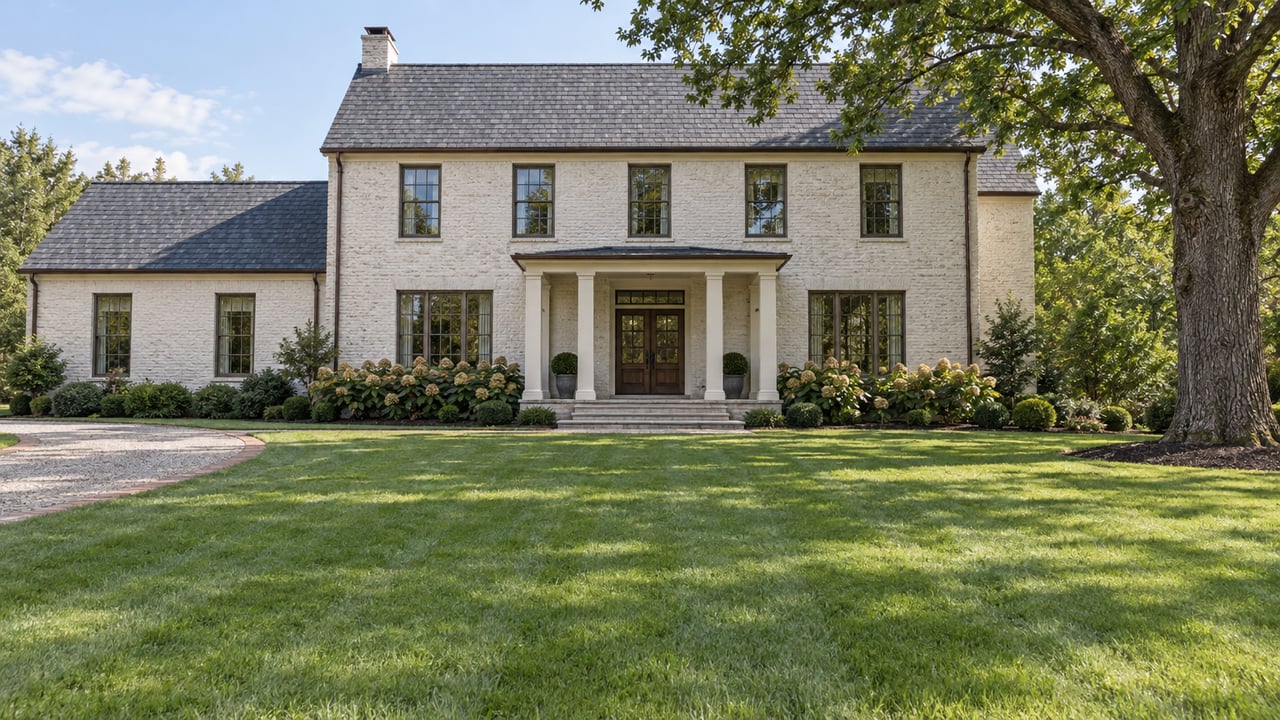
On a septic lot in Eads, adding a pool, a fifth bedroom or a detached shop can mean getting the wastewater system re-permitted first. The Tennessee Department of Environment and Conservation says a Septic System Modification Permit is needed to increase the number of bedrooms in an existing home, or to build "a pool/garage/shop/barn or any other construction that will impact a portion or all the existing septic system." The Shelby County Health Department's septic application asks for the number of bedrooms, the number of occupants, the acreage, and whether the property has public water or wells.
So an Eads estate comes with a document that says what the house was permitted to hold. Buyers who plan to expand and sellers whose homes have already been expanded both meet that document sooner or later. The same rules that set its limits also explain why Eads looks the way it does: two- and four-acre lots, two-lane roads and very little commercial frontage.
The Minimum Lot Size Depends on the Utilities
The Memphis and Shelby County Unified Development Code ties minimum lot size in the Conservation Agriculture and Residential Estate districts to how a lot gets water and handles wastewater.
| Utility situation | CA minimum lot | R-E minimum lot |
|---|---|---|
| No public water, no public sewer | 4 acres | 4 acres |
| Public water and approved individual treatment system | 2 acres | 2 acres |
| Public water and decentralized sewer | 1 acre | 22,000 sq. ft. |
| Public water and public sewer | 1 acre | 22,000 sq. ft. |
In Conservation Agriculture, the same zoning allows lots one-quarter the size once public sewer arrives. The code gives CA a 60-foot front setback and requires no curb and gutter in any utility configuration. In R-E, curb and gutter become required once a lot has decentralized or public sewer. County staff have described CA, or the older Agricultural zoning it replaced, as the default zoning for unincorporated Shelby County since zoning was adopted there in 1935.
The two-acre lot common across Eads is what the code produces when a lot has public water and septic. The four-acre parcel is what it produces when a lot has neither.
George R. James Road Shows the Rules at Work
A recent subdivision case shows how these rules play out. Case S 2025-043 proposed 32 lots on about 69.241 acres of vacant CA land at 0 George R. James Road, with each lot at least two acres. The staff report for the September 11, 2025 Land Use Control Board meeting recommended approval with conditions and waivers. The final vote is not covered here.
The staff conclusions included these points.
- Soil first. Because of where the property sits, the applicant had to run soil tests to confirm each lot could support a septic system.
- Trees over pavement. The applicant asked for a waiver from improvements along Coburn and George R. James Roads because of the mature trees there.
- Overhead lines. Power lines along the George R. James frontage had to be relocated, or new trees set back to clear them.
- A second try. The same project had been approved before under S 2019-029 CO, but that approval expired.
Staff found the plan "compatible with and in keeping with the character of development in the neighborhood." In practice, that character comes from a soil test on every lot, roads kept narrow so the trees can stay, and a lot size the utilities make close to fixed.
Why the Roads Stay Two Lanes
The same logic covers roads. In a nearby case, The 901 Report covered the Shelby County Commission's 9–3 vote on August 24, 2026 rejecting the TwinWood planned development, a proposal for warehouse and self-storage uses on 53 acres at Houston Levee Road and Pisgah Road. The site has a Cordova address rather than an Eads one, but it is the same kind of eastern Shelby County CA land.
Two statements from that hearing apply directly to Eads. According to The 901 Report, the county planning director said CA zoning allows large-lot homes on two-acre lots, which he estimated at about 26 homes on the 53 acres. He also said the two-lane sections of those roads "will not be widened or improved until someone develops the properties on either side," and that the county engineer had no plans to widen them. The applicant's side argued that every existing four-lane section of Houston Levee between Macon and US 64 had been built by developers as a condition of approval.
On Collierville-Arlington Road in Eads, the record shows the same expectation. A December 2025 staff report covered case Z 2025-006, a request to rezone about 2 acres of a 25.14-acre CA parcel at 1348 N Collierville-Arlington Road to Commercial Mixed Use. County engineering noted that development would require dedicating 34 feet from the road's centerline. Staff recommended rejecting the rezoning.
Where the Septic File Shows Up in a Sale
Shelby County runs its own septic program, separate from TDEC's state service, and TDEC lists Shelby among the counties that handle septic requests locally. The septic system tends to come up at these points in a transaction:
- The inspection letter. TDEC describes inspection letters, which document the status of an existing system, as "routinely requested by the property owner, realtor, lending institution or property buyer when a property is being sold, a mortgage financed or for a subdivision plat approval." The sources describe the letter as a common request in sales and financing. They do not describe it as a legal requirement of every sale.
- The water sample. TDEC says total coliform water samples, typically taken from the kitchen sink, are "routinely requested for real estate transactions."
- The bedroom count. The county application records bedrooms and occupants, so a listing that advertises more bedrooms than the system was permitted for raises questions.
- The buyer's plans. Under the county's septic regulations, a permit is required before an onsite system is constructed, altered, extended or repaired. A pool or guest house planned over the drainfield or its backup area runs into this rule.
The paperwork itself is straightforward. Shelby County's application requires a plot plan, a soil map when one is required, and a property sketch showing the house site, well location, springs, driveway and utilities. The processing fee is $175, or $300 for low-pressure-pipe, mound and alternative systems, and fees are non-refundable. No work may begin until the permit is received. Under county rules, suitability can be shown through a high-intensity soil evaluation by a TDEC-certified soil scientist or through percolation testing, with an ordinary threshold of no more than 105 minutes per inch.
When soil is poor, the system options change. TDEC says alternative systems such as low-pressure pipe and mounds are typically used when soil or site conditions are unfavorable for a conventional system, and they require an extra-high intensity soils map from a licensed consultant. Two Eads homes on similar acreage can have very different room for expansion depending on which kind of system they have.
The Four-Acre Line
One more threshold affects how Eads land gets divided. Shelby County's septic regulations define a "subdivision" as land divided into two or more lots for building where subsurface sewage disposal systems will be used. A division into tracts that are each four acres or larger falls outside that definition. TDEC's statewide guidance draws the same line at five acres, but Shelby County administers its own program. The county's four-acre figure also matches the UDC's minimum for a CA lot with no public water or sewer. For an owner thinking about carving off a homesite for family, or for a buyer weighing a large parcel's future, the split comes out very differently on either side of four acres.
FAQ
Does Eads have public sewer? It depends on the parcel. In 2017, Action News 5 reported that the City of Memphis had stopped allowing new sewer hookups outside its limits. A 2018 Memphis Business Journal item reported a reversal, with the city planning to maintain the sewer system in unincorporated Shelby County. Neither report maps current service in Eads, so each property's utilities have to be confirmed one by one.
Is a septic inspection legally required to sell? TDEC describes inspection letters and coliform water samples as routinely requested by buyers, owners, agents and lenders. It does not describe them as required for every sale. Whether a particular transaction calls for one depends on the contract and the financing.
Can a septic system serve a barn or detached shop? TDEC says conventional and alternative systems can serve accessory buildings such as a garage, shop or barn. New construction that affects an existing system triggers the modification permit described above.
Why does a new home on an existing septic system need paperwork for electric service? Under T.C.A. 68-221-414, which took effect July 1, 1994, the electrical inspector must have written notice that a new house is on public sewer, has a septic permit application filed, or will use an existing system before processing a request for service.
If you are pricing an Eads estate, planning a pool or a guesthouse, or weighing a parcel by what its soil will support, Judy Mac Team can help you gather the permit history and inspection records before they become a negotiating point. Contact us to start with the paperwork that defines your property.
This article is general information, not legal, tax or financial advice. Consult a qualified professional about your situation.