Thinking about buying in Midtown Memphis? One of the biggest surprises for many buyers is how quickly the architecture can change from block to block. You might see a porch-front bungalow, a stately foursquare, and a formal revival home within just a few minutes. If you understand the main styles before you tour, you can better spot what fits your lifestyle, renovation plans, and long-term goals. Let’s dive in.
Why Midtown architecture feels so varied
Midtown is not one uniform neighborhood built at one time. It developed in layers, with areas like Central Gardens, Evergreen, and Vollintine-Evergreen growing heavily in the early 20th century.
Streetcar service, the Parkway system, and later redevelopment patterns helped shape what buyers see today. That is why Midtown offers a mix of bungalows, foursquares, and more formal revival homes instead of a single look.
Midtown also was not frozen in one era. Records for Central Gardens note later styles such as Minimal Traditional, Ranch, International Style, and Art Deco, which adds even more range to the housing stock.
Craftsman bungalows in Midtown
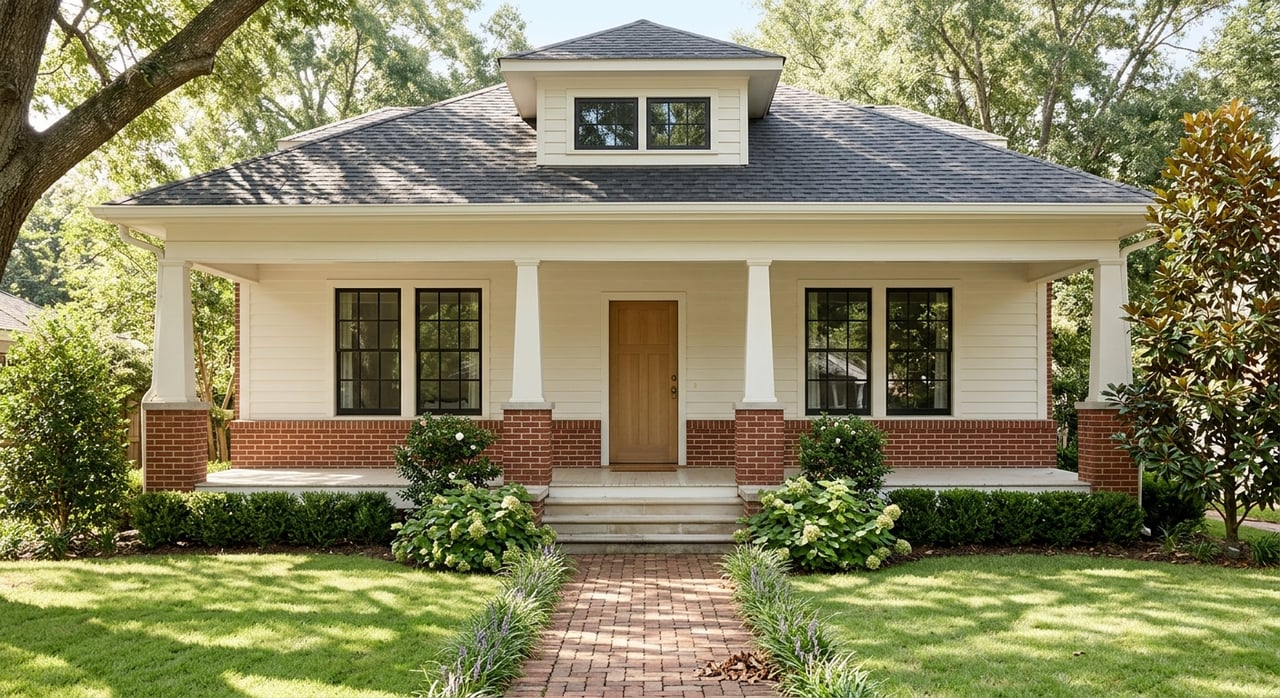
Craftsman bungalows are some of the most recognizable homes in Midtown. They are usually one to one-and-a-half stories and often feature broad front porches, low-pitched roofs, and exposed rafters or brackets.
Inside, these homes tend to have a compact and more informal flow. For many buyers, that means charm, livability, and a footprint that can feel easier to manage than some of Midtown’s larger historic houses.
You will find bungalows throughout Central Gardens, Cooper-Young, Evergreen, Vollintine-Evergreen, and Idlewild. If porch living matters to you, this is one style worth watching closely.
What buyers often like about bungalows
- Strong front-porch character
- Manageable size compared with larger historic homes
- Warm, informal layout
- Distinctive architectural details
American foursquares for space and simplicity
If you want more square footage but still like historic character, an American foursquare may stand out. These homes are generally two stories with a square floor plan, a hipped roof, symmetrical facades, and a full or partial front porch.
Many foursquares also have a straightforward layout that feels easy to understand during a showing. Buyers often appreciate the balance of space, function, and strong curb presence.
In Midtown, examples appear in Central Gardens, Evergreen, and Stonewall Place. They can be a great fit if you want room to spread out without giving up neighborhood character.
Colonial Revival and Tudor Revival homes
Some Midtown buyers are drawn to homes with a more formal or dramatic look. Colonial Revival and Tudor Revival homes often fill that role, and both styles appear across several Midtown districts.
Colonial Revival homes usually emphasize symmetry and classical details. You may notice formal entrances, columns or pilasters, and features such as fanlights, sidelights, or Palladian windows.
Tudor Revival homes tend to feel more storybook and textured. Common details include steep roofs, cross gables, half-timbering, tall narrow windows, and prominent chimneys.
These styles appear in areas such as Central Gardens, Cooper-Young, Vollintine-Evergreen, and Idlewild. If exterior presence matters to you, these homes often make a strong first impression.
How these two styles differ
| Style | Common look | Buyer appeal |
|---|---|---|
| Colonial Revival | Symmetrical, formal, classical details | Traditional layout and polished curb appeal |
| Tudor Revival | Steep roofs, cross gables, textured exterior details | Distinctive character and dramatic architectural lines |
Queen Anne, Greek Revival, and other ornate homes
At the more decorative end of Midtown’s market, you may encounter Queen Anne, Greek Revival, and other stately historic styles. These homes are especially visible in Central Gardens and Victorian Village.
Queen Anne homes are often asymmetrical and visually rich. They may include mixed materials, intersecting gables, dormers or turrets, stained glass, and spindlework on porches or entryways.
Greek Revival homes take inspiration from temple architecture. They often have columns, pedimented roofs, and a more balanced, formal appearance.
In these same historic areas, you may also see Colonial Revival, Italianate, Spanish Revival, Beaux Arts, and other eclectic designs. For buyers, that means Midtown can offer both architectural variety and true one-of-a-kind homes.
Where styles tend to cluster
Architecture in Midtown is tied closely to neighborhood context. Knowing where styles tend to cluster can help you narrow your search and set expectations before you start touring.
Central Gardens
Central Gardens is known for its strong front-porch identity and broad range of historic homes. The neighborhood developed heavily from 1900 to 1930, and it remains one of Midtown’s best-known areas for architectural variety.
It is also positioned a few minutes by car from Overton Park, Rhodes College, Christian Brothers University, Overton Square, Evergreen, and Cooper-Young. If you want historic character with close access to major Midtown destinations, this area often comes up quickly in a search.
Cooper-Young
Cooper-Young is one of the easiest Midtown districts to experience on foot. It is widely recognized for local restaurants, music shops, and art galleries, which gives the area a lively neighborhood feel.
Architecturally, buyers can encounter bungalow and revival-style homes here. If daily life and walkability are part of your decision, Cooper-Young offers a distinct Midtown experience.
Evergreen and Vollintine-Evergreen
Evergreen and Vollintine-Evergreen tend to feel more residential. Buyers will see early-1900s homes, mature streetscapes, and a close relationship to Rhodes College and Overton Park.
Evergreen is especially notable for its mix of preserved older homes and later infill tied to redevelopment after the planned I-40 extension was rerouted. Nearby Midtown blocks, including Vollintine-Evergreen, are often described as quiet, tree-lined, and close to trails.
Overton Park’s role in Midtown living
Overton Park is a major anchor for Midtown. The park includes 342 acres with the Old Forest trails, the Overton Park Shell, the Memphis Zoo, a golf course, Rainbow Lake, Veterans Plaza, and the Greensward.
For buyers, that matters because architecture is only part of the decision. Access to green space, trails, and nearby destinations can shape how a home feels day to day.
What architecture tells you as a buyer
In Midtown, style is not just about looks. It can also hint at floor plan, roof form, outdoor living patterns, and the level of maintenance or renovation planning a home may require.
A bungalow may suggest a more compact layout and porch-centered living. A foursquare may point to a simpler, roomier plan. A Tudor or Colonial Revival home may bring stronger formal design cues and more specialized exterior details.
When you tour Midtown homes, it helps to look past curb appeal alone. Consider how the architecture supports the way you want to live, host, work, and maintain the property over time.
Renovation rules to check before you buy
If you are considering changes after closing, this step is important. Many of Midtown’s best-known historic districts, including Central Gardens, Cooper-Young, Evergreen, Victorian Village, and Vollintine-Evergreen, are listed as historic overlay districts by the Memphis Landmarks Commission.
In Memphis, planned exterior changes in those districts require pre-approval from the Landmarks Commission. That includes visible work such as new construction, demolition, relocation, and exterior alterations.
For example, Central Gardens guidelines apply to exteriors and street-visible areas and identify additions, enclosures, fences, walls, driveways, and gates as items that require a Certificate of Appropriateness. If you are budgeting for porch changes, window replacement, site work, or an addition, confirm the district rules early.
Smart questions to ask before buying a historic Midtown home
- Is the home in a historic overlay district?
- Which exterior changes require pre-approval?
- Are there existing features you want to preserve or restore?
- Does the floor plan match your needs now?
- Will your renovation budget need to account for review timelines?
How to shop Midtown with confidence
Midtown rewards buyers who pay attention to detail. Two homes at a similar price point may offer very different layouts, upkeep needs, and renovation flexibility based on architectural style alone.
That is why local guidance matters. When you understand where styles cluster, what each home type often offers, and which exterior changes may require approval, you can make a more informed decision and avoid expensive surprises.
If you are exploring Midtown Memphis and want help matching architecture, location, and lifestyle, Judy McLellan & The JudyMac Team can help you navigate the details with clarity and care.
FAQs
What architectural styles are common in Midtown Memphis?
- Midtown Memphis commonly includes Craftsman bungalows, American foursquares, Colonial Revival homes, Tudor Revival homes, Queen Anne houses, Greek Revival homes, and other historic styles such as Italianate, Spanish Revival, Beaux Arts, Minimal Traditional, Ranch, International Style, and Art Deco.
What makes a Craftsman bungalow different in Midtown Memphis?
- In Midtown Memphis, Craftsman bungalows are typically one to one-and-a-half stories with broad front porches, low-pitched roofs, exposed rafters or brackets, and a more compact, informal layout.
Where can buyers find historic homes in Midtown Memphis?
- Buyers often find historic homes in Central Gardens, Cooper-Young, Evergreen, Vollintine-Evergreen, Idlewild, Stonewall Place, and Victorian Village.
Do historic Midtown Memphis homes have renovation restrictions?
- Yes. Many well-known Midtown districts are historic overlay districts, and planned exterior changes in those areas may require pre-approval from the Memphis Landmarks Commission.
Why does architectural style matter when buying in Midtown Memphis?
- Architectural style can signal how a home is laid out, how it lives day to day, what exterior details may need upkeep, and whether future renovation plans could require review before work begins.