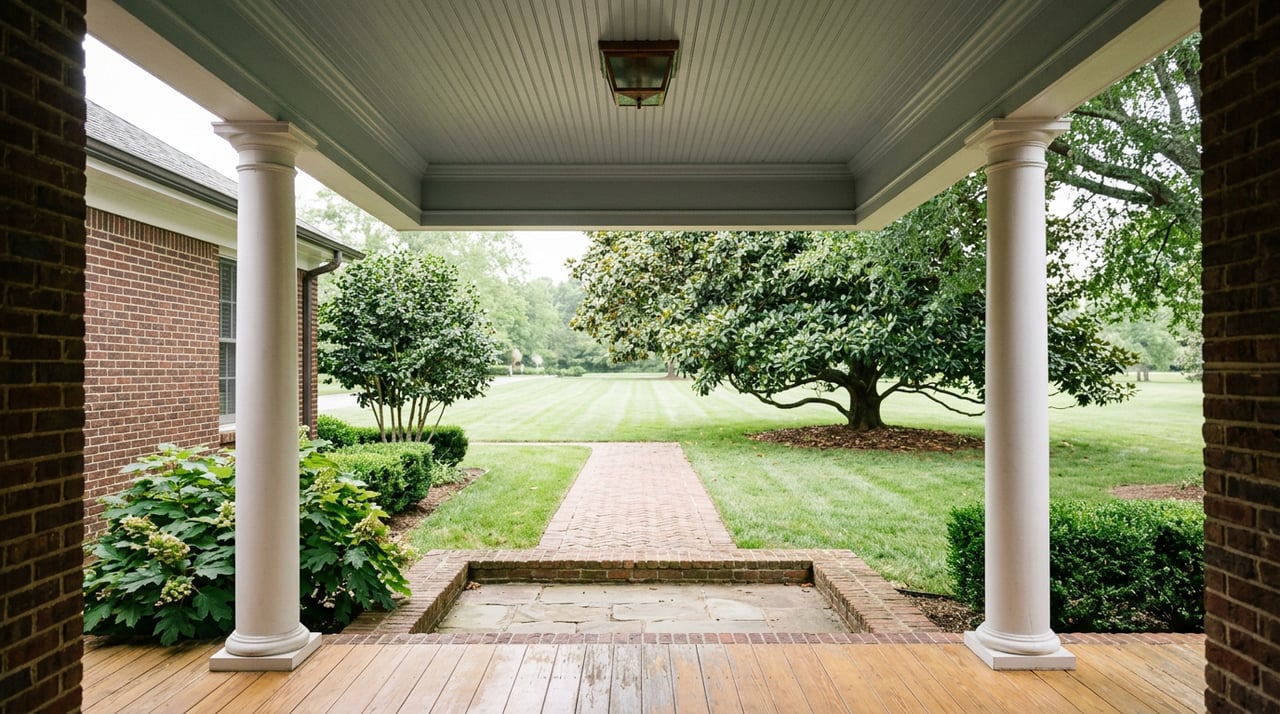
The moment usually arrives near the end of a Germantown closing, when someone slides a one-page form across the table and everyone exhales. It says no visible evidence of active infestation. Buyers read that as safety. Sellers read it as done. Neither reading is quite right, and the gap between what that letter says and what actually protects the house afterward is where a surprising number of Germantown transactions get complicated, usually right after the ink dries.
That form is a Wood Destroying Insect Inspection Report, and in Tennessee it is a snapshot, not a guarantee. It tells you what a licensed inspector could see on one afternoon, in the areas they could reach. It says nothing about what happens if termites show up six months later, and it says nothing about who pays if they do. The document that actually answers that question is the termite bond sitting behind it, and in an older Germantown home, whether that bond covers repairs or just another round of spray is the single most consequential thing nobody asks about before listing.
What the Letter at Closing Actually Says
The WDIIR, sometimes called a termite letter or a clear letter, follows a standard national format that most lenders recognize, including HUD and the VA. In Tennessee, the licensed inspector who signs it has to hold a charter under the state's wood-destroying organisms category, and state rule requires the report to carry a 90-day warranty on the accuracy of what it describes. That is a real protection, but it is narrower than it sounds. It backs up what the inspector wrote down, not what happens to the house going forward.
Tennessee also draws a line most sellers do not expect. Some states require inspectors to note wood decay fungus alongside insect damage. Tennessee does not. The state's requirement covers wood-destroying insects only, meaning termites, carpenter ants, carpenter bees, and reinfesting wood-boring beetles. A clean letter tells you those four categories were absent that day. It does not speak to moisture damage, and it is a visual inspection only, meaning it does not cover insulation, wall cavities, or furniture-blocked areas.
None of that makes the letter useless. It means the letter is the floor, not the ceiling, of what a buyer should expect to know before closing.
Why This Question Lands Harder in Older Germantown
Germantown's newer construction on slab foundations carries a different risk profile than its established, tree-canopied subdivisions. Neighborhoods like Farmington, Poplar Estates, Forest Hill, and Dogwood Grove sit on older crawl space foundations under decades of mature landscaping, and that combination, not the age of the house alone, is what raises the odds of an active finding on inspection day. Crawl space grading shifts over time. Mulch beds get refreshed against foundations year after year. Mature trees mean more root systems and more moisture retention near the slab edge. Every pest control company working this market flags the same pattern: mature trees, older crawlspaces, and established wood structures create conditions subterranean termites are drawn to.
That is not a warning about any specific property. It is a description of why a 20-year-old home on a wooded half-acre lot in East Germantown warrants a more careful read of its termite history than a five-year-old build in a newer section of the city.
The Zone Memphis Sits In
Context matters here because it changes how seriously a buyer or seller should take the bond question. Memphis and Shelby County sit inside Zone 1, the heaviest termite pressure classification on the national probability map lenders and inspectors reference. The eastern subterranean termite is established countywide, including in Germantown. But Shelby County also carries something most of Tennessee does not: confirmed Formosan termite colonies, first documented along the Mississippi River corridor in the early 2000s. Formosan colonies are more aggressive and harder to eradicate than the native species, and even though Germantown sits well inland from that corridor, the countywide risk profile shapes how local pest control companies write their contracts.
That regional pressure shows up in the price. As of mid-2026, termite treatment in Memphis and West Tennessee runs roughly 10 percent above the Nashville and East Tennessee median, a premium tied directly to the documented Formosan presence in Shelby County. Local operators routinely build Formosan-aware language into their bond terms as a result, even for homes many miles from the river.
The Insurance Blind Spot
Here is the assumption that catches new Germantown homeowners off guard. A standard HO-3 homeowner's policy, the most common form in the Mid-South, excludes insect damage entirely. If termites get into a floor joist, the insurance company will not pay to fix it, no matter how long the family has carried the policy or how high the premium runs. The only mechanism that transfers that financial risk off the homeowner is the termite bond itself, typically running $150 to $300 a year as of 2026 for a damage warranty version.
That single fact is why the bond question deserves more attention at closing than it usually gets. The termite letter tells you about the day of inspection. The insurance policy will not help you later. The bond is the only document in the stack actually built to absorb the cost if something is missed.
Two Bonds That Look Identical on Paper
Not all termite bonds do the same job, and the difference rarely shows up until a claim gets filed.
A damage warranty bond obligates the pest control company to pay for structural repairs if termites cause damage while the bond is active, in addition to retreating the colony.
A retreatment-only bond obligates the company to treat again if termites return. It says nothing about who pays for the wood they already ate.
As Formosan pressure has grown across the broader Gulf South and Mid-South, more of the industry has shifted toward retreatment-only contracts, because comprehensive repair bonds became expensive to underwrite once Formosan colonies entered the picture. Two homes on the same Germantown street can carry bonds that look identical in name and cost while offering entirely different protection. The only way to know which one you have, or which one you are inheriting as a buyer, is to read the contract language directly rather than assume the word bond means the same thing every time.
Tennessee law offers one piece of leverage here. Any termite service agreement written without an initial treatment must state clearly on the front of the contract if no damage repair guarantee is included. Skipping that disclosure is a violation of the Tennessee Consumer Protection Act. It is worth asking to see that language in writing before signing anything, whether you are the one buying the bond or inheriting it.
What Tennessee Disclosure Law Actually Requires
The Tennessee Residential Property Disclosure Act requires anyone selling a home with one to four dwelling units to give the buyer a completed disclosure form describing known material defects, and termite history falls squarely inside that category. Active infestations, prior damage, and prior treatments all qualify if the seller has knowledge of them. Sellers are not required to hire an inspector or investigate further than what they already know, but once they know something, it has to appear on the form.
Buyers have a matching responsibility. The disclosure form is explicitly not a warranty, so a buyer relying on it alone, without a separate wood infestation contingency in the purchase agreement, is accepting more risk than the paperwork suggests. Many lenders will only accept a WDI report for 30 days before requiring a fresh one, which matters for timing if a sale drags past that window.
The Negotiation Move Most People Miss
When a WDIIR turns up past activity with no current evidence, the instinct is often to schedule a fresh treatment and move on. There is a better option worth raising first. If the existing bond on the property is a damage warranty bond in good standing, ask the seller to transfer it at closing rather than let it lapse into a new policy. A transferred bond usually costs a small fee and preserves continuous coverage. Starting over with a new contract, especially one written as retreatment-only to keep the premium low, can quietly downgrade the protection a buyer thought they were getting.
What This Means If You're Listing an Older Germantown Home
Before a home in Farmington, Forest Hill, Poplar Estates, Dogwood Grove, or any similarly established Germantown neighborhood goes on the market, it is worth pulling the current termite bond and reading past the first page. Confirm whether it covers repairs or only retreatment. Confirm it is transferable and what that transfer costs a buyer. If the bond has lapsed or was never a damage warranty version, addressing that before listing avoids a renegotiation at the closing table, when leverage has already shifted.
A few questions worth asking before you sign anything:
Does the bond currently in place cover structural repairs, or only retreatment of new activity?
Is the bond transferable at sale, and is there a fee or deadline attached to that transfer?
If the WDIIR shows past but inactive damage, has that damage already been repaired, and is there documentation of the repair?
FAQ
Does a clean termite letter mean the house has never had termites?
No. It means no active infestation was visible on the day of inspection. A home can have a fully clean current WDIIR and still show prior treatment history on the seller's disclosure form. Both documents matter, and they answer different questions.
Is a termite inspection legally required to sell a home in Tennessee?
State law does not mandate one for every sale, but most lenders do, particularly for VA and FHA loans, and most conventional lenders follow the same standard. Cash sales are the main exception, though a WDIIR is still worth getting for peace of mind on an older home.
If the current bond is retreatment-only, is it worth upgrading before listing?
That depends on the property's age, foundation type, and landscaping, and it is a conversation worth having with both a pest control professional and your agent before you set a list price, since the cost of upgrading is usually small next to what it can prevent at the negotiating table.
Older homes in established Germantown neighborhoods carry character that newer construction cannot replicate, and that character comes with maintenance details worth handling correctly rather than avoiding. If you are preparing to list, or you are further along in a purchase and want a second set of eyes on what a bond actually covers, the Judy Mac Team has spent decades walking Memphis-area sellers and buyers through exactly this kind of detail. Contact us before the paperwork gets ahead of the plan.